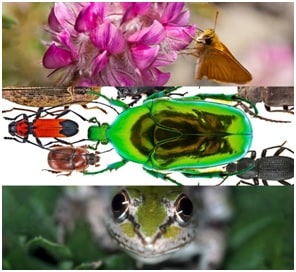
Description This innovative 3-months online course (16 January to 7 April 2023) deals with the crucial concepts of biodiversity and climate change as well as the interaction between them. Two groups of organisms, directly affected by climate change, Herpetofauna (amphibians &…
3 Oct – 16 Dec 2022 Museum and Institute of Zoology Polish Academy of Sciences, Warsaw, POLAND Cours
Description The Training course in “Crustacean systematics with specialisation in Cyclopidae (Copepoda)” will focus on the following modules: a) relationships of the Palearctic Cyclopidae; b) Cyclopidae in Southeast Asia; c) insular fauna. Beyond these main topics, help can…
3–14 October 2022 d on writing the most common form of publication, i
Basics of Taxonomy 2022 Date : 3-14 October 2022 Title Basics of Taxonomy Description The course is structured in a sequence of five interlinked modules. Each module will start with an introductory lecture of approx. 1-3 hours. Then the remaining part of each module is…
19–23 September 2022 Iași, Romania Course’s language English Target audience Graduating and post-grad
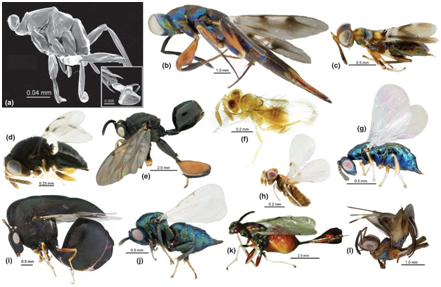
Description Parasitic wasps are one of the most diverse groups of insects. They are of tremendous importance in regulating insect populations and are increasingly used in biological control worldwide. Chalcidoidea is the second largest superfamily of parasitic wasps after…
12 July 2022 National Museum of Natural History, Entomology laboratory, 45 rue Buffon, 75005,
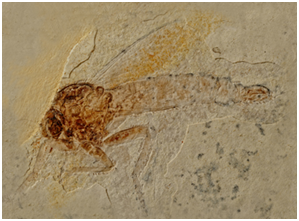
Description The aim of this training course is to provide to the trainees all the general practices in the discipline, in order, they become autonomous in Palaeoentomology. Trainees will be exercised in the preparation of fossils (rocks and amber), the acquisitions of images,…
21–25 March 2022 of taxonomy in modern biology and at taxonomists who wish to apply advanced tech
Integrative Taxonomy in the Big Data Era Date : March 21-25, 2022. Course description The general objective of this course is to shed a modern light on the activity of species delimitation and description. More specifically, it is about showing how taxonomy integrates technical…
e-Taxonomy and biodiversity informatics tools and workflows This module will provide an overview of the vision, history and future of biodiversity and e-taxonomy informatics. It will develop your understudying of the landscape, key concepts and terminology in the field, the…
17 October 2019 d on writing the most common form of publication, i
Scientific writing and communication Participants will learn the particularities of writing and presenting scientific studies. Main emphasis will be placed on writing the most common form of publication, i.e. the primary scientific paper. The course will explain the current…
Scientific illustration Participants will learn to understand the human perception of illustrations. They will be informed about a variety of illustration methods and will practise a limited number of these. Besides the illustration of biological specimens, specific technical…
Digital drawing Participants will learn to make scientific illustrations with the digital drawing method using the software program Adobe Illustrator. In many labs, this has become a standard method for making taxonomic descriptions, as there are great advantages in working…
DELTA (Description Language for Taxonomy) Participants will learn the basics of DELTA as well as the great potential of the program. DELTA is an advanced computer program developed by CSIRO (Commonwealth Scientific & Industrial Research Organisation, Australia) to handle all…
15 October 2019 of taxonomy in modern biology and at taxonomists who wish to make the most of th
Date : recurring Course description The general objective of this course is to bring a new light to the species description activity. More specifically, it aims to show how taxonomy integrates the technical advances of molecular biology while recalling the importance of natural…