
Past course
Digitisation of Natural History collections: From data quality to cleaning and data publishing
The CETAF-DEST Training course “Digitisation of Natural History collections: From data quality to cleaning and data publishing. A hands-on experience” will target the basic and important steps and standards of the digitisation process of all biological, geological,…
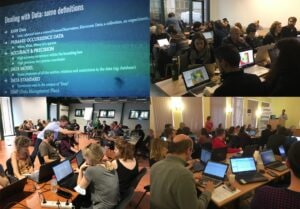
The CETAF-DEST Training course “Digitisation of Natural History collections: From data quality to cleaning and data publishing. A hands-on experience” will target the basic and important steps and standards of the digitisation process of all biological, geological, palaeontological & mineralogical data of the natural history collections. These are:
Origins of data (taxonomic data, specimens and materials, literature data, field work notes, occurrence data, remote sensing data, etc.).
Data quality for ensuring the maximum quality when digitising taxonomic, geographical, collection and descriptive data.
Data cleaning in order to improve the quality of data and make them “fit-for-use” by defining and determining error types, search and identify error instances, correct the errors, document error instances and error types and modify data entry procedures to reduce future errors.
Biodiversity Data Standards, such as Darwin Core, or the ABCDEFG Standards which are documented agreements on representation, format, definition, structuring, tagging, transmission, manipulation, use, and management of data, in order to ensure that data can be easily verified, analysed and reused by the wider scientific community.
Publishing of data using the IPT (INTEGRATED PUBLISHING TOOLKIT) for the biological data and the GeoCASe platform for the geological, palaeontological & mineralogical data.
The course will be a 5 days’ hands-on experience, since, according to its schedule, most of the time is dedicated to exercises on data quality and cleaning while group work will ensure and motivate interaction between trainees and trainers and foster lively discussions. Moreover, trainees will have the possibility to bring sample(s) of their institutional biodiversity and geodiversity digital database and exercise on them.
Teachers
TRAINERS SHORT CVs | |
 | Dimitri Brosens,MSc, is the Biodiversity Data Liaison Manager from the Belgian Biodiversity Platform in the Flemish Research Institute for Nature and Forest since early 2009. Since 2021 he also act as the GBIF node manager for Belgium. The ultimate goal of Dimitri is to get Belgium on the world map of biodiversity data. He has a particular interest in the publication, standardization and interoperability of biodiversity datasets. |
 | Dr Piotr Tykarski works at the University of Warsaw, teaching entomology, invertebrate zoology, ecology and GIS. His scientific interests focus on saproxylic beetles and, factors and patterns in biodiversity. He has been involved in biodiversity informatics activities and GBIF in Poland since 2003. Currently in this respect he plays a double role of a node manager and a HoD of GBIF for Poland. |
 | Dr Heimo Rainer is a curator in the Viennese Herbaria of the NHM (W) and the University (WU) and coordinates digitization there. They have established the Virtual Herbaria Platform JACQ a consortium of 40+ institutions and individuals. His research focus is the taxonomy of a tropical plant genus Annona. |
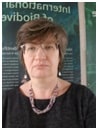 | Dr Larissa Smirnova is assistant at Royal Museum for Central Africa where she currently coordinates Synthesys+ project. Since 2009 she has been involved in different European and national projects connected to biodiversity informatics and digitization. She is also part of the GBIF mentoring and training program and has participated as invited coach in a number of training courses on data publishing. |
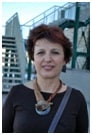 | Dr Catherina Voreadou is the head of Hydrobiology Lab of the Natural History Museum of the University of Crete. In parallel, since 1998 she is the head of Education and since 2012 she is leading also the Centre of Environmental Training of NHMC responsible for Life Long Learning. Member of the Greek National Accreditation Centre for Continuing Vocational Training (EKEPIS), as trainer for adults. She has coordinated or participated in 19 Research Educational and Training projects funded either by National or European sources. She is the author and editor of many Educational editions. |
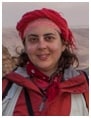 | Dr Iasmi Stathi is a scorpiologist in the Natural History Museum of the University of Crete. Member of the Greek National Accreditation Centre for Continuing Vocational Training (EKEPIS), as trainer for adults. Sixteen years of experience in Environmental Education Programs, Training for Life Long Learning Education and Education Research and Development at the Dept. of Education, NHMC-UOC. She has also participated in 18 Research Educational projects funded either by National or European sources. |
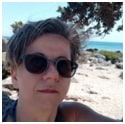 | Athanasia Margetousaki, is a Pedagogist and has a postgraduate degree in Teaching Science. She works as a Special Technical Scientific Staff (EIB) at the Natural History Museum of Crete of the University of Crete. She has many years of experience in adult education by participating in adult education and training programs. She has participated in many research projects funded by European and national resources. She has also participated with announcements in national and world conferences. |
Registration fee
500€
Registration deadline
20 June 2023
Mode of trainees’ assessment
Participant quota (min and max number of trainees)
The analytical program is:
CETAF-DEST Training course
“Digitisation of Natural History collections: From data quality to cleaning and data publishing”
November 13-17 2023
Venue: Natural History Museum of Crete-University of Crete
IMPORTANT INFO:
ALL HANDS-ON EXERCISES IN THE DAILY PROGRAM WILL BE IMPLEMENTED IN PARALLEL GROUPS:
Trainees managing Biological data
Trainees managing Geological, Palaeontological, Mineralogical data
Day 1 13/11/2023
09.00 - 09.30
WELCOME, GAME for GETTING TO KNOW EACH OTHER
SESSION A
09.30 – 10.00
PRESENTATION OF THE TRAINING COURSE, TRAINEES’ EXPECTATIONS
Catherina Voreadou, Iasmi Stathi, Athanasia Margetousaki
10.00 – 10.30
RECOVERY OF PREVIOUS KNOWLEDGE
Catherina Voreadou, Iasmi Stathi, Athanasia Margetousaki
10.30 – 11.00
Coffee
SESSION B
11.00 – 11.30
INTRODUCTION TO BIODIVERSITY DATA STANDARDS, DISCUSSION
Larissa Smirnova
11.30 – 12.00
GBIF, IPT (INTEGRATED PUBLISHING TOOLKIT), TYPES OF DATA SET CONVENIENT FOR PUBLICATION IN GBIF, DISCUSSION
Piotr Tykarski
12.00 – 12.30
GeoCASe - ABCDEFG STANDARDS (ACCESS TO BIOLOGICAL COLLECTION DATABASES EXTENDED FOR GEOSCIENCES), TYPE OF DATA SETS CONVENIENT FOR PUBLICATION IN GeoCASe, DISCUSSION
Heimo Rainer
12.30 – 13.00
OVERALL DISCUSSION
13.00 - 14.00
Lunch
SESSION C
14.00-15.30
HANDS ON EXERCISE in parallel groups:
DATA QUALITY & CLEANING, PREPARATION OF DATA SETS
Software: OPEN REFINE/QGIS/R-studio/Other tools
Dimitri Brosens, Piotr Tykarski, Heimo Rainer, Larissa Smirnova
15.30-16.00
Coffee
SESSION D
16.00- 17.00
HANDS ON EXERCISE in parallel groups:
DATA QUALITY & CLEANING, PREPARATION OF DATA SETS
Software: OPEN REFINE/QGIS/R-studio/Other tools
Dimitri Brosens, Piotr Tykarski, Heimo Rainer, Larissa Smirnova
Day 2
14/11/2023
SESSION E
09.00 – 11.00
HANDS ON EXERCISE in parallel groups:
DATA QUALITY & CLEANING, PREPARATION OF DATA SETS
Software: OPEN REFINE/QGIS/R-studio/Other tools
Dimitri Brosens, Piotr Tykarski, Heimo Rainer, Larissa Smirnova
11.00 – 11.30
Coffee
SESSION F
11.30 – 13.00
HANDS ON EXERCISE in parallel groups:
DATA QUALITY & CLEANING, PREPARATION OF DATA SETS
Software: OPEN REFINE/QGIS/R-studio/Other tools
Target groups
The course is addressed to everyone who is engaged in biological and geological collections and their data, such as Curators and Collections’ managers, Directors/Senior managers, Collections’ Digitization managers/officers, Scientists on bio- or geo informatics, Early Career Investigators (individuals who are within a time span of up to 8 years from the date they obtained their PhD/doctorate in full-time equivalent), Students (Post graduates, MSc, PhD), Technicians of collections
Language requirements
In order to follow the TS, trainees need a CEFR (Common European Framework of Reference for Languages) B1 level of English, as the formal language of the TS is English.
Technology and other requirements
Trainees are required to bring their own laptops. They are also recommended to bring sample(s) of their institutional biodiversity and geodiversity digital database in order to be exercised on them.
Venue
More details: dest@cetaf.org